How long is a garment used? Didriksons combined life cycle assessment with user insights
When Didriksons began working with Miljögiraff on life cycle assessment, the aim was to understand the environmental impact of its products and identify the most effective opportunities for improvement. But to understand the true environmental performance of a garment, we also needed to understand the people who wear it. By combining life cycle assessment with a user study focusing on garment lifespan, Didriksons gained new insights into how design, user behaviour and product lifespan influence climate impact.
Didriksons aims to do even better
Didriksons has been developing functional outerwear for Nordic weather conditions for over a century. Sustainability has long been an integral part of the business, but in 2026, the company wanted to take the next step and gain a deeper understanding of the environmental impact of its products.
Together with Miljögiraff, Didriksons therefore began working with life cycle assessment.
The aim was to answer a few key questions:
- Where in the life cycle does the greatest climate impact occur?
- Which improvement measures have the greatest impact?
- How can the results inform future product development?
- And how significant is the use phase to a garment’s actual environmental performance?
For Didriksons, the project was about more than calculating climate impact. It was about building a knowledge base to inform future decisions and communication.
“Our aim with the project was to understand how our consumers use their garments and draw on these insights to make informed decisions in product development that help extend the lifespan of our garments.”
Fanny Ekholm, CSR Manager, Didriksons
Life cycle assessment with a focus on actual use
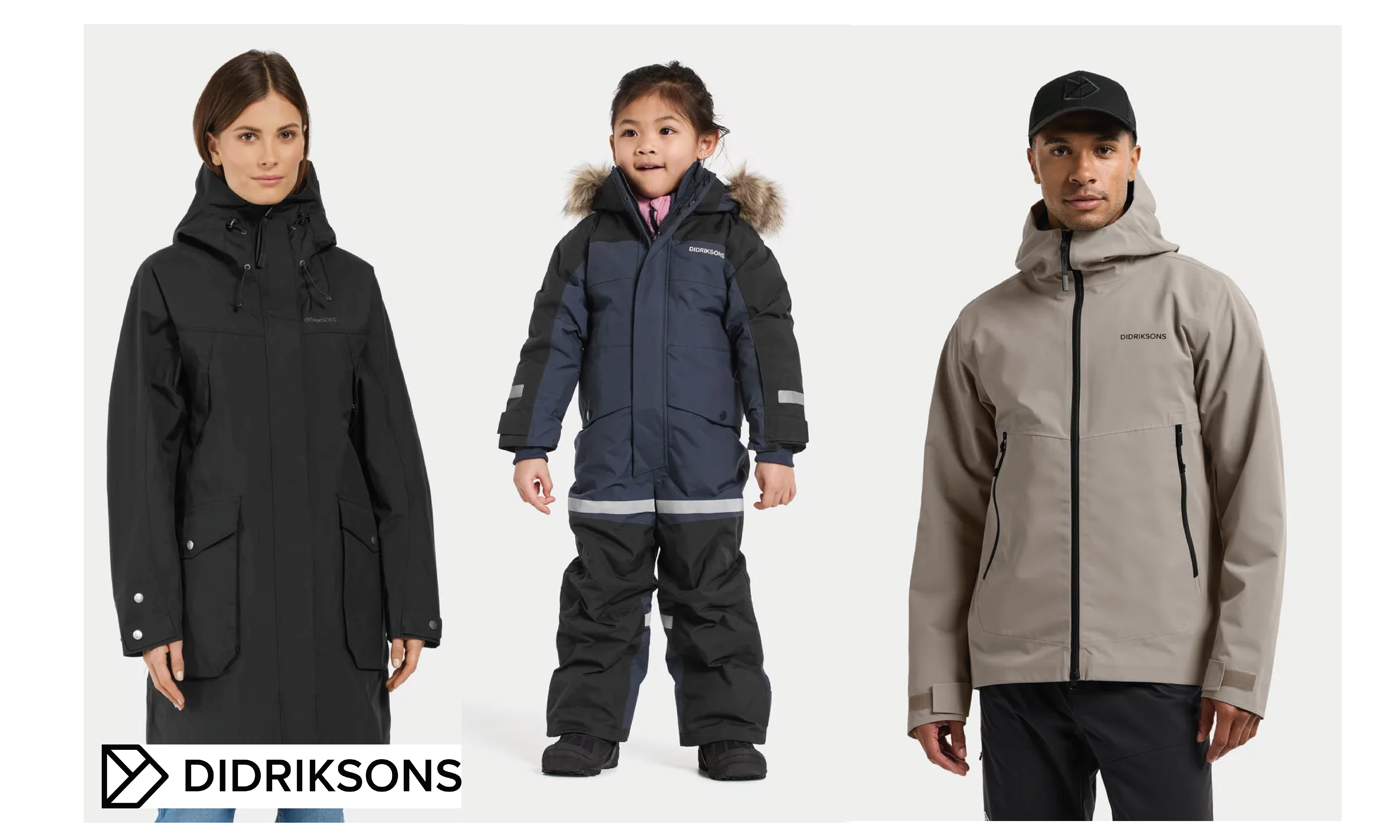
The project covered three of Didriksons’ key product segments:
- Ladies jacket/parka
- Children’s winter coverall
- Men’s jacket
Miljögiraff conducted life cycle assessments in accordance with ISO 14040 and ISO 14044 for all products. Alongside the assessments, a garment lifespan study involving surveys and in-depth interviews was carried out to provide more realistic and product-specific data for modelling the use phase.
We explored for example:
- How long the garments are used
- How often they are used
- Washing and care habits
- Repair behaviour
- Why garments are no longer used
- Which functional, technical and emotional factors influence garment lifespan
By taking into account how often a garment is worn, how it is washed and cared for, and what Didriksons’ customers do with it when they stop using it, we were able to reduce uncertainties surrounding the use phase of the assessment. The result is an assessment that captures the garment’s entire lifespan and highlights how both production and consumption decisions affect the environment. This is also where we can begin to transform linear business models into circular.

“Outdoor clothing companies are generally good at creating technically durable garments, but that doesn’t matter if the garments aren’t used or are discarded before they wear out. To understand a garment’s true environmental impact and pave the way for circular business models, we need to understand the people who use them, rather than make assumptions.”
Clara Olsson, life cycle designer & project manager, Miljögiraff
“By studying the use phase of our products together with Miljögiraff, we have gained a better understanding of how our products are actually used, their technical lifespan and, above all, the factors that prevent them from being used for longer. These insights help us understand how we can ensure that the garments we bring to market remain in use throughout their full technical lifespan.”
Fanny Ekholm, CSR Manager, Didriksons
Exploring garment lifespan using the Future Adaptive Design methodology
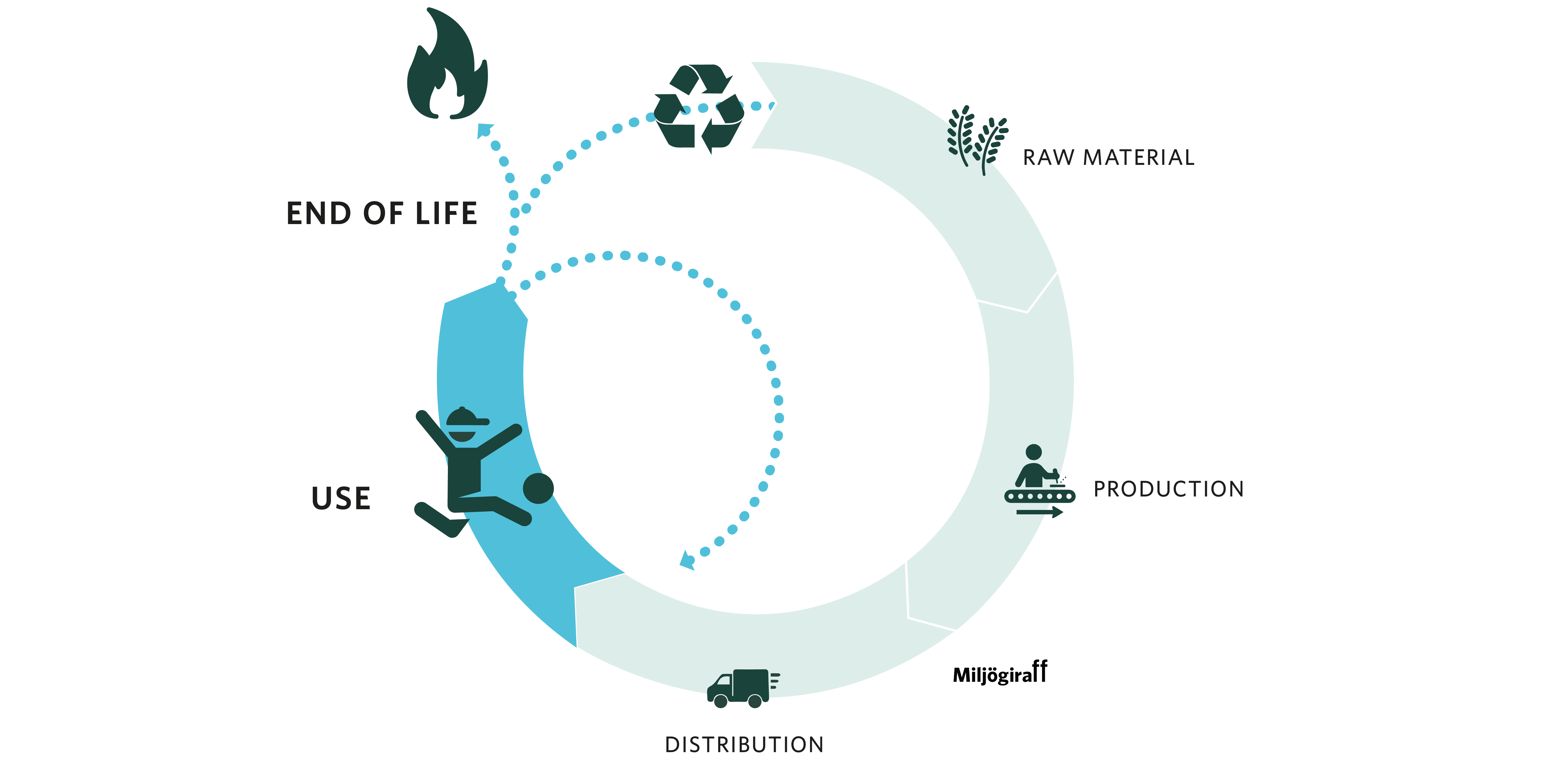
When conducting product lifespan studies, Miljögiraff uses methods including Future Adaptive Design (FAD). Developed by RISE, this methodology for design and business development is based on four perspectives that influence product lifespan.
Technical ageing
The product loses its value through wear and tear or breaks.
Aesthetic ageing
The product’s visual appeal declines, for example due to its shape or colour.
Functional ageing
The customer’s needs change, and the product no longer meets them.
Social ageing
The product loses value due to societal changes, such as digitalisation and new business models.
Read more about the method on RISE webisite
The results highlight the importance of user behaviour
The life cycle assessments showed that material production and textile manufacturing account for the largest share of the products’ climate impact. However, perhaps the most important insight came from the garment lifespan study.
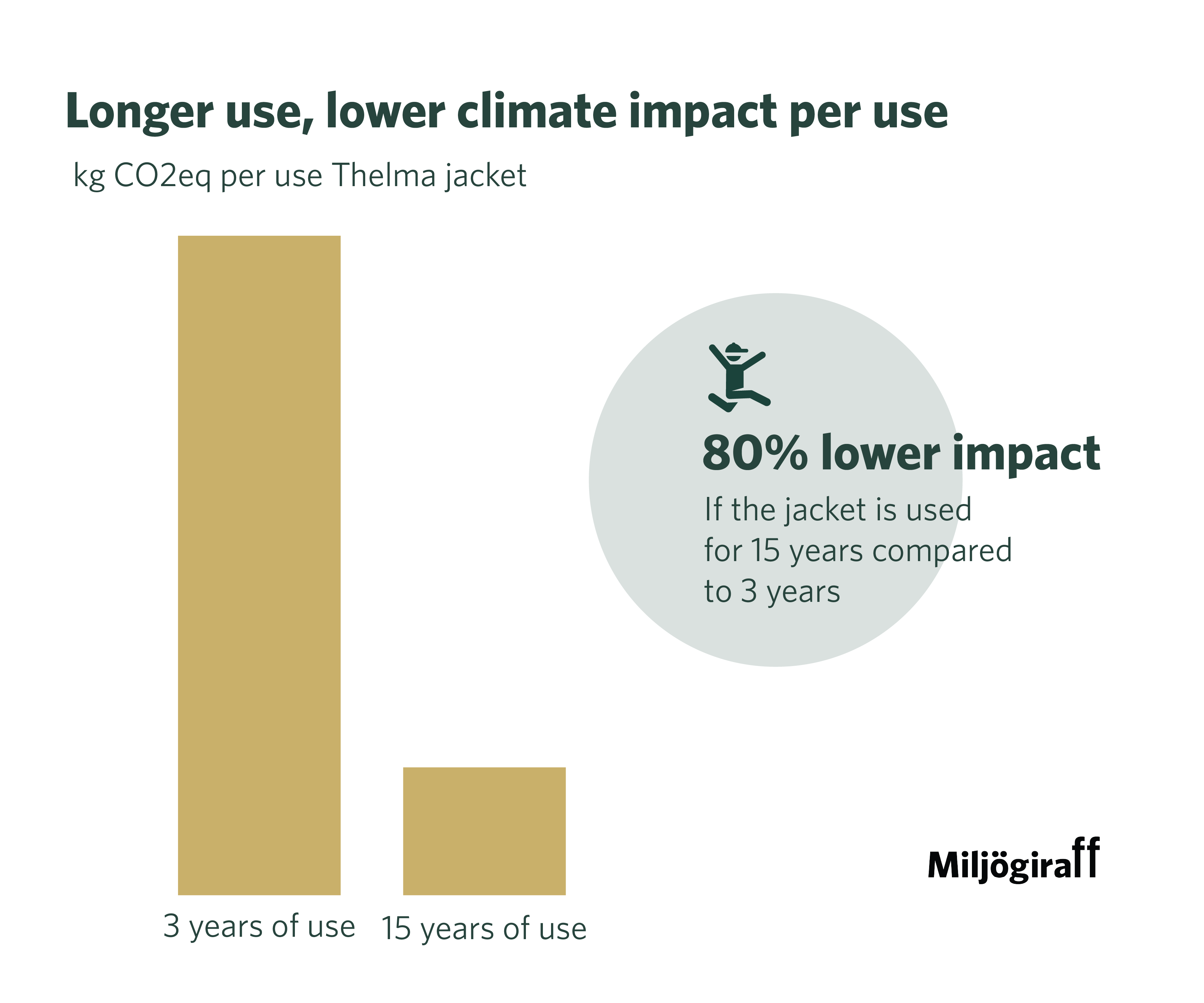
How long a garment remains in use plays a crucial role in determining its climate impact per use. When its lifespan is extended, the impact from production is spread across more occasions of use, resulting in a significantly lower carbon footprint per use.
The scenario analysis for the Thelma women’s parka illustrates how extending a garment’s lifespan can reduce its climate impact per use. The results showed that the climate impact per use is 80% lower when the jacket is used for 15 years compared to just 3 years.
The garment lifespan study also provided a better understanding of why garments are no longer used before they are worn out. This knowledge helps Didriksons develop products and offerings that meet customers’ needs and enable garments to remain in use throughout their full technical lifespan, for example through reuse.
A knowledge base for future decisions
The project provided Didriksons with a new foundation for informed decision-making in its future sustainability work.
In addition to identifying environmental hotspots across the value chain, the project provided a deeper understanding of how user behaviour influences a product’s environmental performance and which factors contribute to a longer lifespan.
These insights can inform work in areas such as:
- Future offerings related to reuse and the second-hand market.
- Sustainable product development,
- Product Environmental Footprint (PEF),
- Digital Product Passport (DPP),
- Design strategies,
- Circular business models,
“The results have helped us understand how widely usage scenarios differ across our product segments. These insights are valuable as we explore future circular business models.”
Fanny Ekholm, CSR Manager, Didriksons
When the user becomes part of the assessment
Many life cycle assessments focus on materials, production and transport. These are important aspects of a product’s environmental impact. However, for products that remain in use for many years, understanding the use phase can be just as important.
The collaboration between Didriksons and Miljögiraff demonstrates the value of combining life cycle assessment with insights into real-world user behaviour. Only then can we understand a product’s true environmental performance and identify the measures that make the greatest difference.
Miljögiraff’s contribution – a summary
- Three life cycle assessments in accordance with ISO 14040/14044
- Garment lifespan study
- Quantitative user studies
- Qualitative interviews
- Hotspot analysis
- Scenario modelling

Curious to learn more about product lifespan studies? Read about our work with Lintex!
Would you like to work with life cycle assessment and the user perspective?
Book a meeting with Maja at maja@miljogiraff.se or fill in the form below and we’ll get back to you!