EHL Profiles – From EPDs to scalable LCA
EHL Profiles already had Environmental Product Declarations for its products. But the market had changed. When the EPDs needed to be updated, simply being able to show that they existed was no longer enough. EHL wanted the results to better reflect its actual production – while also building knowledge and structures that could be used beyond the environmental declarations themselves.
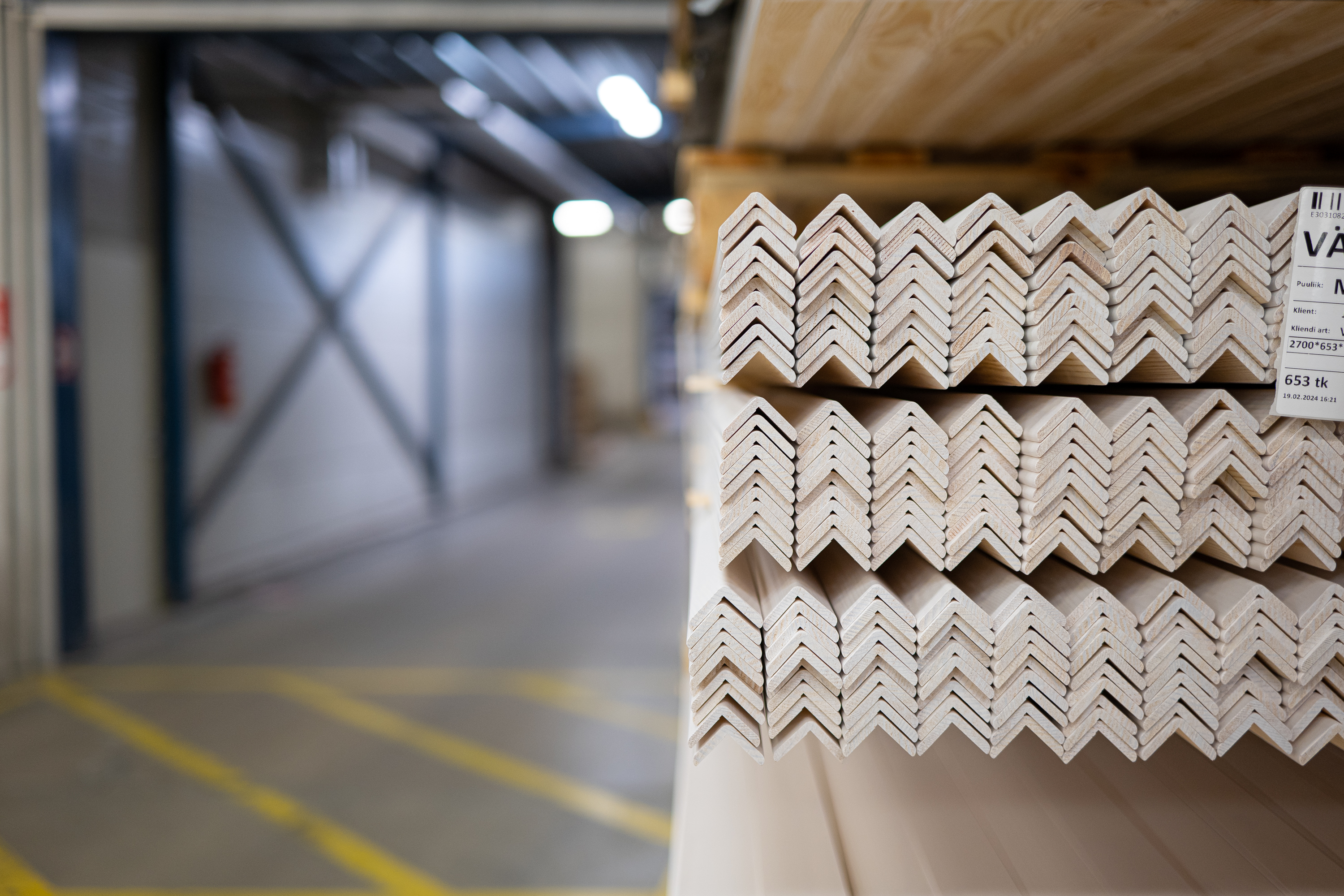
EHL Profiles manufactures wooden mouldings and acoustic panels for interior applications. Production is distributed across five sites in Sweden, Estonia and Poland and includes everything from untreated wooden mouldings to surface-treated products, MDF mouldings and acoustic panels.
The company was not new to LCA. Life cycle assessments and published EPDs were already in place.
But since the first declarations had been developed, something had changed.
Demand for environmental data in the construction industry had increased. Competitors had caught up. Simply being able to say “we have an EPD” was no longer as differentiating as it once had been. The quality and specificity of the information had become increasingly important: How well do the figures represent the actual product the customer is buying?
For EHL, updating the EPDs therefore became an opportunity to do more than replace existing declarations. The work also created a clearer structure and a reusable foundation that can support a more scalable LCA approach over time.
At Miljögiraff, we describe this development as:

Understand

Structure

Scale

Use
Existing analyses became the starting point – rather than something to redo
When Miljögiraff began the assignment, there was no reason to start from scratch. The existing EPDs and the underlying LCA report instead became the starting point. The questions were: What was still relevant? What had changed? And where did the information need to become more specific? This is a central principle of a scalable LCA approach: the first analysis should not only provide a result. As far as possible, its data, models and methodology should be reusable the next time.
For EHL, it quickly became a question of structure. The Product Category Rules for construction products, PCR 2019:14, had been updated. It was no longer possible to report several separate product results within the same EPD in the same way as before. For EHL, with five production sites, several wood species and different surface treatments, the challenge was therefore not only how to calculate the results – but how to structure the entire product portfolio.
The solution was a multiple-product, multiple-site approach. This resulted in more EPDs than before, but also significantly greater granularity. EHL moved from a handful of declarations to ten product groups, with clear relationships and conversion possibilities between products and production sites. This made it possible to extract information relevant to a particular product, customer or project within each EPD.
Understand – which data actually matters?
Five production sites meant different products, processes and conditions. Eesti Höövelliist and Liistuabrik in Estonia, Grimslöv and Prolist Nordic in Sweden, and Drewest in Poland manufacture different combinations of wooden products, surface-treated products, MDF mouldings and acoustic panels.
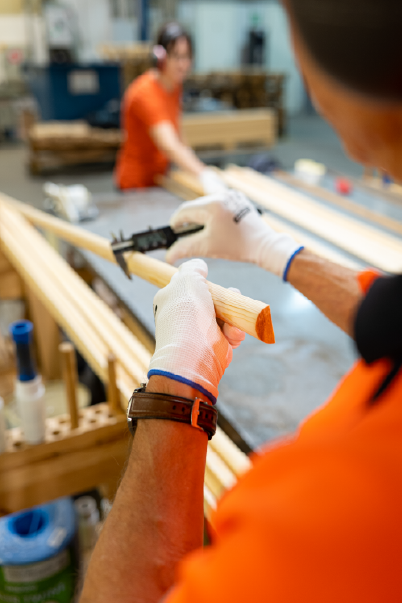
To ensure representative results, the products therefore needed to be structured according to factors such as wood species, product type and manufacturing site. Liisa Olesk and Jaan Oja at EHL played a central role in collecting and completing the information. This is a part of LCA work that is rarely visible in the final EPD. Behind the figures are people who need to know where information can be found, which suppliers need to be contacted and what information is actually required from production.
How specific do you really need to be?
The ambition was to get closer to EHL’s actual products. Information was therefore collected on material quantities, suppliers, raw material origins and transportation. Where supplier-specific EPDs were available, these could be used. Where such information was unavailable, representative data was applied.
But the work also demonstrated an important principle:
The objective is not to collect as much information as possible. The objective is to understand which information matters.
Data collection, modelling and analysis therefore had to interact throughout the project. Early screening analyses were used to identify which materials and processes had the greatest significance across different environmental impact categories. Where the impact was small, representative data could be sufficient. Where differences could potentially affect the conclusions, more specific information was required.
Structure – from product data to reusable LCA models
As information from products, suppliers and the five production sites was structured, something was being built that had value beyond the individual EPDs. In total, 15 representative products were analysed. The models formed the basis for ten product groups and made it possible to identify both common patterns and important differences.
This is where the potential to move from individual LCA work towards a scalable approach becomes clear.
Rather than treating every product as a new analysis, it becomes possible to identify which parts of the data and models are shared, which parameters vary and which differences actually influence the results.
For EHL, the work created a clearer and more consistent structure for environmental data. The data and insights now provide a reusable foundation for ongoing sustainability work and future declarations. An important next step is to build knowledge throughout the organisation so that more people can interpret the figures correctly and explain their value to customers.
Scale – 15 representative products created a structure for a larger portfolio
Once the models were established, the representative analyses could be used for significantly more products than the 15 that had been analysed individually.
This is at the heart of scalable LCA: finding the right level of product representation and creating models and data structures so that every new article does not have to start from zero. For EHL, the work resulted in ten clearly defined product groups, with the ability to provide relevant information for different products and production sites.
EHL sees clear value in extending the same structure to a larger part of the portfolio, making it easier to calculate, compare and communicate the environmental performance of more products.
But the models also made something else possible. They began to reveal where the environmental impact actually occurs. The analysis identified raw materials, manufacturing and end-of-life treatment as significant parts of the life cycle. Solid wood, for example, had a greater impact within land use, linked to forestry. Adding materials such as paint, lacquer, foil, adhesive and felt generally increased environmental impact compared with untreated wooden mouldings.
This is the point at which an LCA begins to change character. It moves from being a way of documenting a product to becoming a way of understanding it.

“An LCA rarely has just one answer. The question you ask determines the answer you get. It is precisely this breadth that makes the analysis useful for different types of decisions”
Hanna Andréasson, LCA expert, Miljögiraff
Use: from results to “what if?”
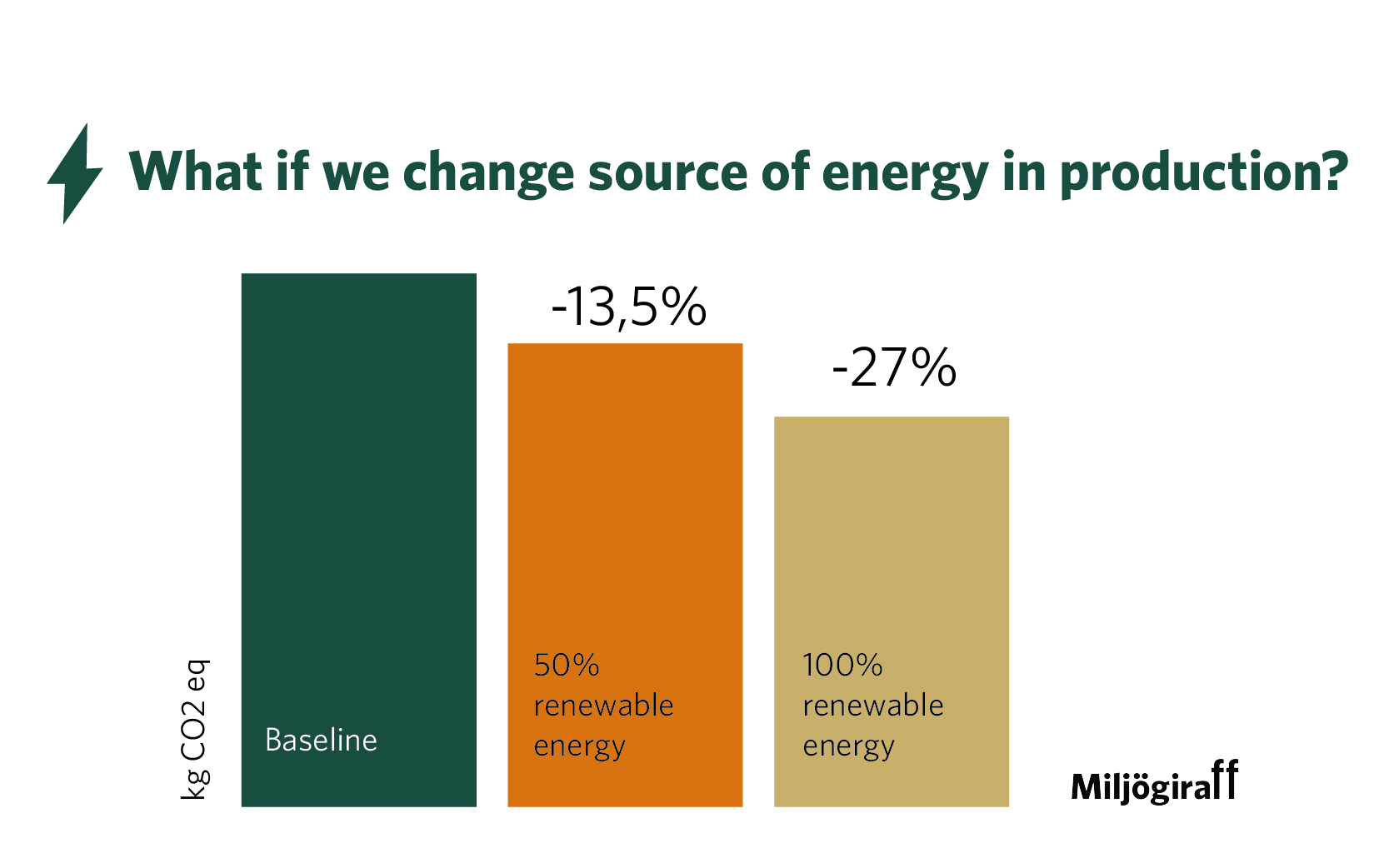
The next step was therefore to use the models to explore potential changes. Differences in energy use between the production sites emerged as a clear hotspot. The team therefore tested what would happen to the climate impact if a greater share of electricity came from renewable sources.
Paint represents only a small proportion of the weight of a wooden moulding, but waste during application still made a noticeable contribution to climate impact. More efficient application methods and improved management of paint waste therefore became interesting areas for improvement.
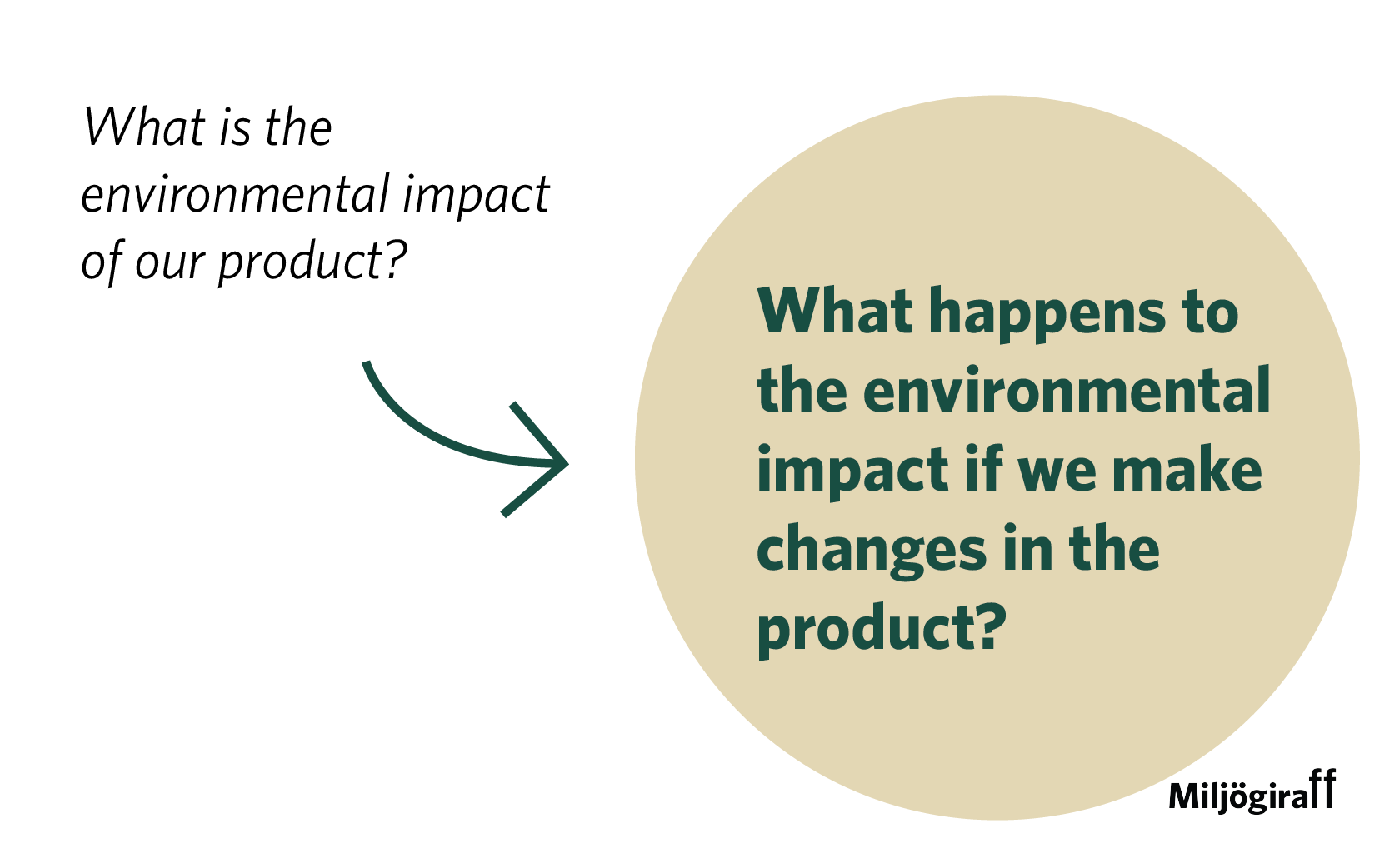
This changes the question a company can ask. Not only: What is the environmental impact of our product? But: What happens to the environmental impact if we change it? That is a considerably more useful question when making decisions about production, materials, suppliers or product development.
The EPD became the beginning of a scalable LCA approach, not the end
An EPD can easily become the end point: data is collected, the LCA is conducted, the results are verified and the declaration is published. EHL’s project demonstrates how the same work can create value beyond the declaration itself.
When information about products, factories, wood species, suppliers, energy and transportation is structured, the company is simultaneously building LCA data, models and knowledge that can be reused.
This makes it easier to update an EPD or analyse additional products. But the same structure can also be used to test a new material, compare energy sources, analyse a change in transportation or evaluate alternative product solutions before they enter production.
This is also the fundamental principle behind Miljögiraff Navigator and our approach to scalable LCA:
Understand → Structure → Scale → Use
For EHL, the journey started with a very concrete need: existing EPDs needed to be updated. But the result became more than a new set of declarations. EHL gained updated, credible EPDs, a clearer and more consistent structure for environmental data, a better understanding of the factors influencing the products’ environmental performance, and a reusable foundation for ongoing sustainability work and future declarations.
For EHL, the next step is to continue building knowledge throughout the organisation and, over time, extend the same structure to more of the product portfolio – moving from producing the numbers to building the capability to understand, scale and use them.
Are you interested in working with scalable LCA?
Book a meeting with Maja, maja@miljogiraff.se, or fill in the form below and we’ll get in touch!