

From one shirt to a scalable LCA approach
A life cycle assessment (LCA) of a classic white men’s shirt became the starting point for Stenströms’ next step in product-level environmental data. Together with Miljögiraff, Stenströms used the project to understand where the product’s environmental impacts actually occur – while also building the knowledge, structure and an LCA model that can eventually be reused for more products.
.
For many textile companies, climate action begins at the organisational level: emissions are calculated, materials are mapped, and sustainability data is reported. But as customers, legislation and internal stakeholders increasingly demand information about individual products, a new challenge emerges.
How do you move from high-level climate reporting to actually understanding the climate impact of a shirt, jacket or pair of trousers?
And above all: how do you do this without having to start from scratch for every product?
These were key questions when Stenströms, together with Miljögiraff, took the next step in its LCA work.
The challenge: from organisational data to product data
Stenströms has an extensive product range and a complex value chain, with materials, suppliers and production stages across several countries.
Calculating the climate impact of a single product is feasible. But if the same work has to be done manually for thousands of products, it quickly becomes both time-consuming and costly.
That is why the goal went beyond simply calculating a carbon footprint.
A selected white men’s shirt was used as a model product to understand:
- what data is actually needed for a product LCA,
- where the most significant data gaps exist in the value chain,
- which assumptions can be standardised,
- where supplier-specific information provides the greatest value,
- and how an LCA model can be built so that it can later be reused for more products.
In this way, the first LCA became the starting point for a more systematic approach.
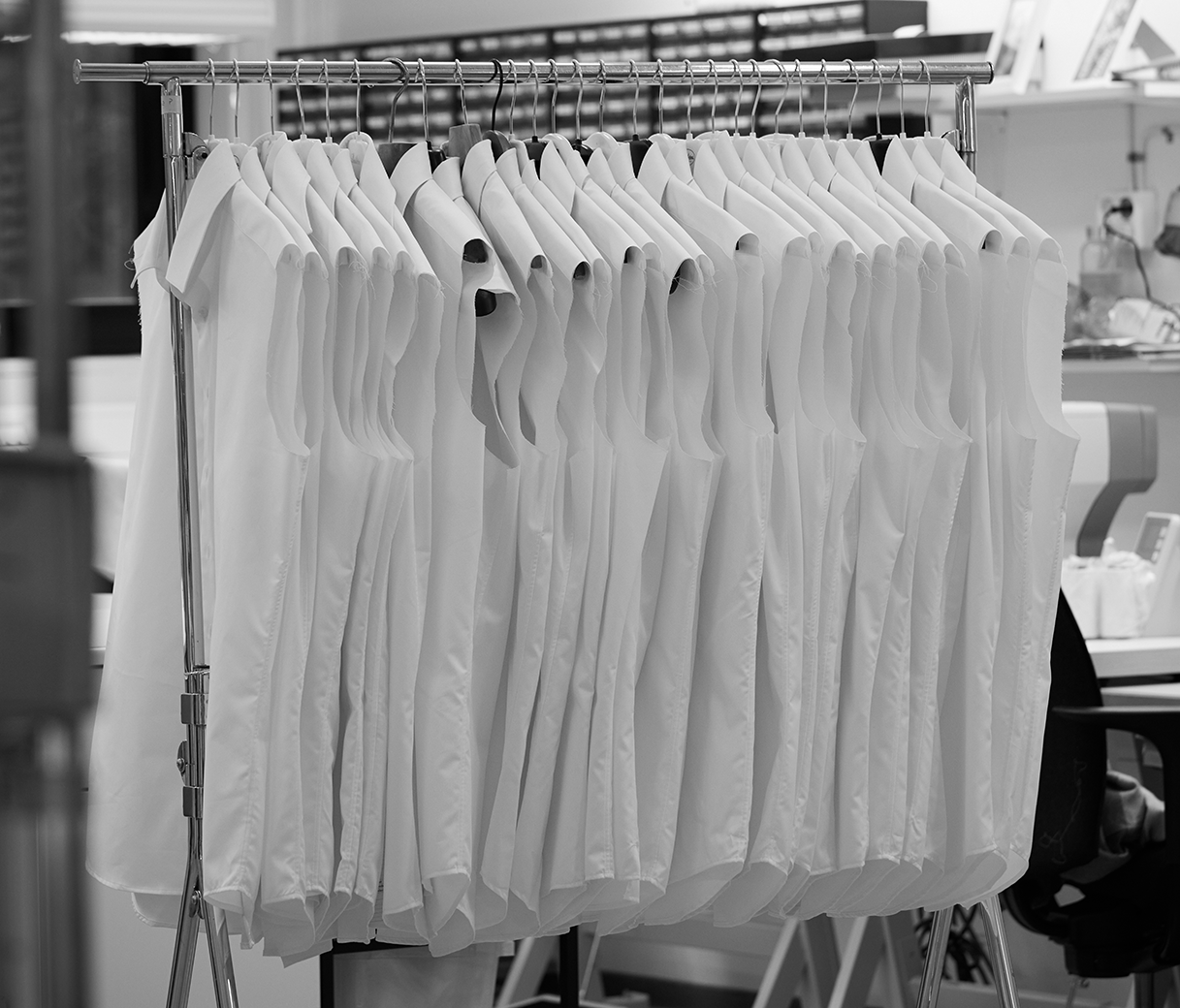
What can a white shirt teach us about environmental impact?
By following one of Stenströms’ most classic products throughout its entire life cycle, it became possible to identify the most important opportunities for improvement.
A key insight was the shift from assumptions to data. Instead of relying on assumptions about what drives environmental impact, the LCA provided a basis for identifying where the impact actually occurs.
As the hotspots become clearer, it also becomes easier to focus sustainability efforts on the parts of the value chain where they can make the greatest difference
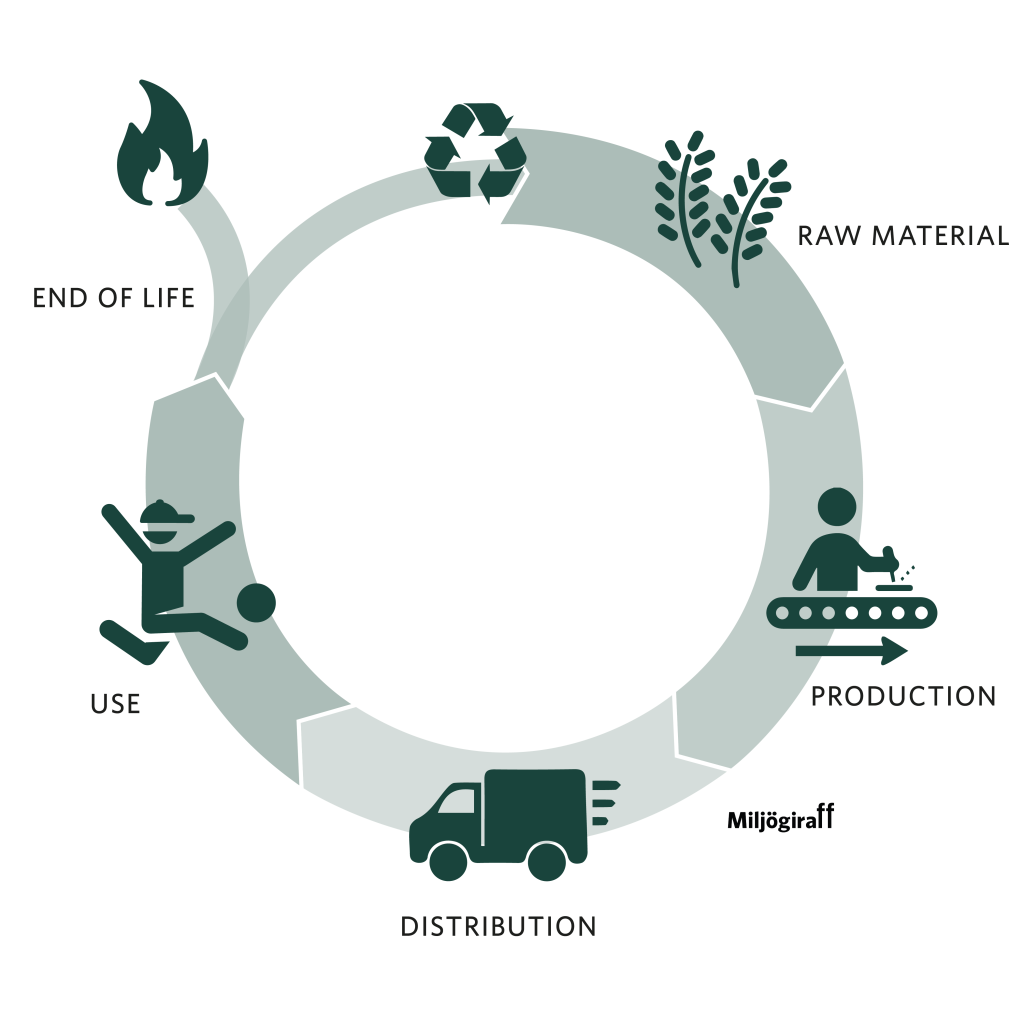
The approach: start with something concrete, build to scale
Together with Stenströms, Miljögiraff started with a specific product and its life cycle.
Materials, production, transport, use and end-of-life were modelled in the LCA. Where data was unavailable, relevant generic data and assumptions were used.
But just as important was identifying what information Stenströms needs to collect and structure going forward.
The work also became a way to build internal LCA expertise. Through workshops and collaborative work, Stenströms gained a clearer understanding of how different parts of its existing product data relate to the climate calculations, and where better data from suppliers, for example, can make the greatest difference.
From generic to specific data
One of the clearest insights was the value of data from the actual value chain.
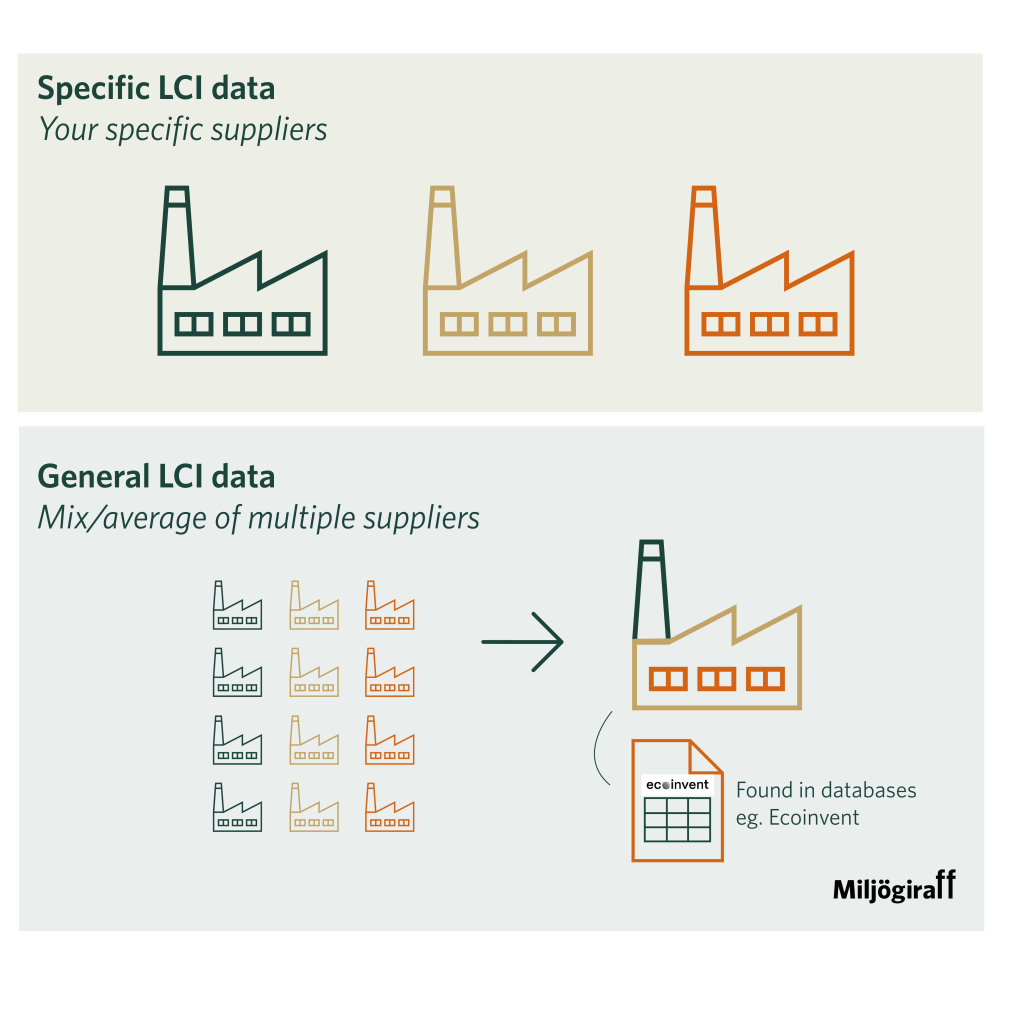
By involving suppliers, generic assumptions could be replaced with specific information about Stenströms’ product and production processes.
In Miljögiraff’s LCA, the specific data showed approximately 20% lower climate impact for the product compared with average data for equivalent processes in the value chain.
This does not mean that specific data always results in a lower impact. Its value lies in ensuring that the analysis better reflects the actual product and value chain – thereby providing a more relevant basis for decision-making.
For Stenströms, this also provided a concrete understanding of where further data collection and supplier dialogue can have the greatest impact.
Partners are part of the change
The product’s environmental impact is shaped by decisions throughout the textile value chain – including stages over which Stenströms has no direct control.
The LCA work therefore confirmed the value of choosing partners who not only provide relevant data, but also share Stenströms’ ambitions and drive improvements further along their own supply chains.
A concrete example is investment in renewable energy further upstream in the value chain. Even though these changes take place at stages where Stenströms has no direct contact, they had a clear impact on the carbon footprint of the final product.
Supplier dialogue therefore becomes more than a matter of data collection. It also becomes an important part of understanding and influencing a product’s environmental performance.
From climate calculations to structural capital & business value
The value of the work therefore lies not only in the results for the shirt analysed.
The first model creates structural capital that can be reused. Once the methodology, data requirements, assumptions and calculation logic are in place, the next question becomes: How much of this can be reused for the next shirt – and the next hundred products?
This opens up an entirely new way of working with LCA.
In the long term, product information from ERP and other business systems, for example, can be connected to a common LCA methodology. This would allow climate and environmental data to become part of the company’s standard product data, rather than something generated separately each time a new need arises.
This also creates a foundation for other use cases, such as digital product passports, customer requests, product development, supplier dialogue and efforts to reduce environmental impact. This is where LCA creates real business value.
The white shirt was a starting point and a representative product within Stenströms’ shirt range.
The next step is to explore how the work can be scaled up – reusing knowledge and data from the first analysis across more products, supporting day-to-day decision-making, and preparing the business for future product data requirements.
A broader challenge for the textile industry
Stenströms is not alone in facing this challenge. Textile companies increasingly need to manage environmental and product information at the product level. At the same time, data is often scattered across internal systems, suppliers and different parts of the value chain.
In IVL’s mapping of the Swedish textile and furniture sector, increasing requirements related to product data and regulatory compliance are highlighted as a challenge for companies.
The question, therefore, is not only how to conduct an LCA for a product, but how data, methodology and models can be structured so that the work can be reused and scaled.
.
Ready to start working with LCA at scale?
We help you with the analysis, structure the work and get started in the right way. Get in touch and let’s book a meeting!