Climate Calculations According to the GHG Protocol – From Reporting to Climate Management
The GHG Protocol gives companies a common structure for measuring, reporting, and following up on greenhouse gas emissions. But the value of a climate calculation does not lie only in being able to report a result. The real benefit arises when the data is used to understand what drives emissions and which measures have the greatest effect.
As requirements for transparency, traceability, and reporting increase, the quality of the underlying environmental data becomes increasingly important. Companies that invest in better data and more detailed analyses are better equipped to make well-founded decisions, prioritize the right actions, and follow up on their climate work over time.
Climate calculations are therefore not only about measuring climate impact — they are about creating knowledge that can be used to reduce it.
What Is the GHG Protocol?
The purpose of the GHG Protocol is to create structure, transparency, and comparability in companies’ climate work. By categorizing emissions and defining common principles, it becomes possible to track climate impact over time and identify where the largest emissions arise.
What Are Climate Calculations Used For?
Climate calculations help companies understand where emissions arise and which activities drive climate impact. The results can be used to:
- map emissions across the entire value chain
- identify emissions hotspots
- prioritize climate actions
- follow up on climate targets
- meet reporting requirements under, for example, CSRD and ESRS
- communicate climate work to customers, investors, and other stakeholders
The Climate Work of the Future Requires Transparent Environmental Data
The standards are clear that climate calculations should not only show the size of emissions — they should also create knowledge about where emissions arise, why they arise, and identify measures that can reduce climate impact.
This means that climate data needs to become more transparent, traceable, and useful. Organizations that establish a systematic approach early on are better positioned to understand their climate impact, prioritize the right measures, and follow up on the effect of their actions. Climate data then becomes not only a basis for reporting, but a tool for management, development, and business decisions.

Many Companies Have Climate Data — But Lack Sufficient Precision
Most companies already have access to large amounts of relevant data. This may include purchases, energy, transport, materials, products, suppliers, and waste. The challenge is to convert this information into a reliable decision-making basis that shows which parts of the business drive climate impact.
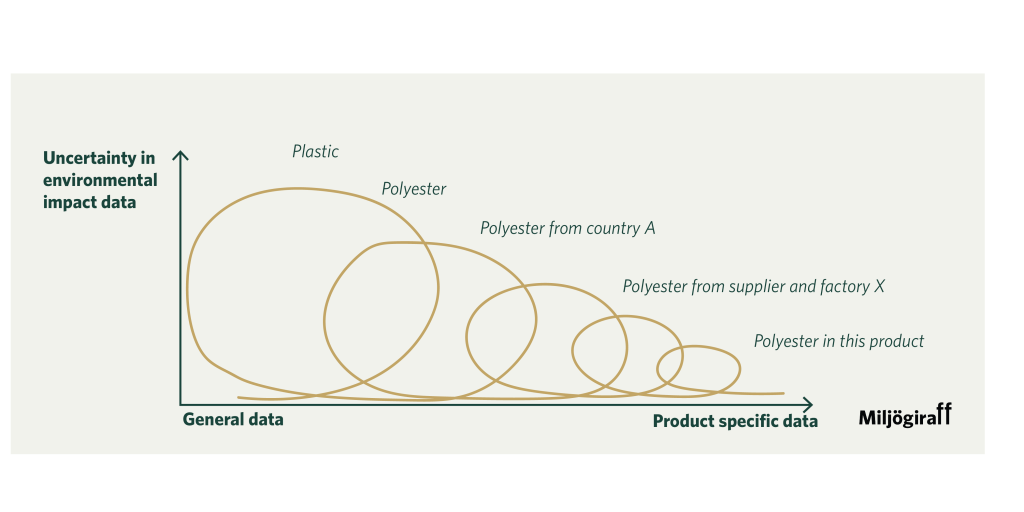
General emission factors and calculation methods based on standard assumptions can be a good starting point and are often sufficient for an initial climate report. But they provide limited guidance when a company wants to understand the causes behind emissions, compare suppliers, follow up on actions, or prioritize between different alternatives.
For climate calculations to be useful in practice, higher precision is therefore required. This means being able to link climate impact to the right activity, product, material, supplier, or process. It also means being able to track how results change over time and understand whether the change is due to actual improvements, changed purchasing patterns, or improved data quality.
From Reporting to Climate Management
For companies that want to work actively with sustainability, the focus is shifting from simply reporting emissions to improving the quality of the data behind the calculations. When climate data becomes more detailed and traceable, it can also be used in purchasing, product development, supplier dialogues, and strategic decisions.
This is where climate calculations create real value. By identifying the largest emission sources and understanding what drives them, a company can focus on the measures that have the greatest effect. This may involve changing materials, setting clearer requirements for suppliers, improving energy use, increasing the share of recycled content, or optimizing use.
The goal is to move from climate reporting to climate management — from measuring emissions to actively reducing them.
Scope 1, 2, and 3 in the GHG Protocol
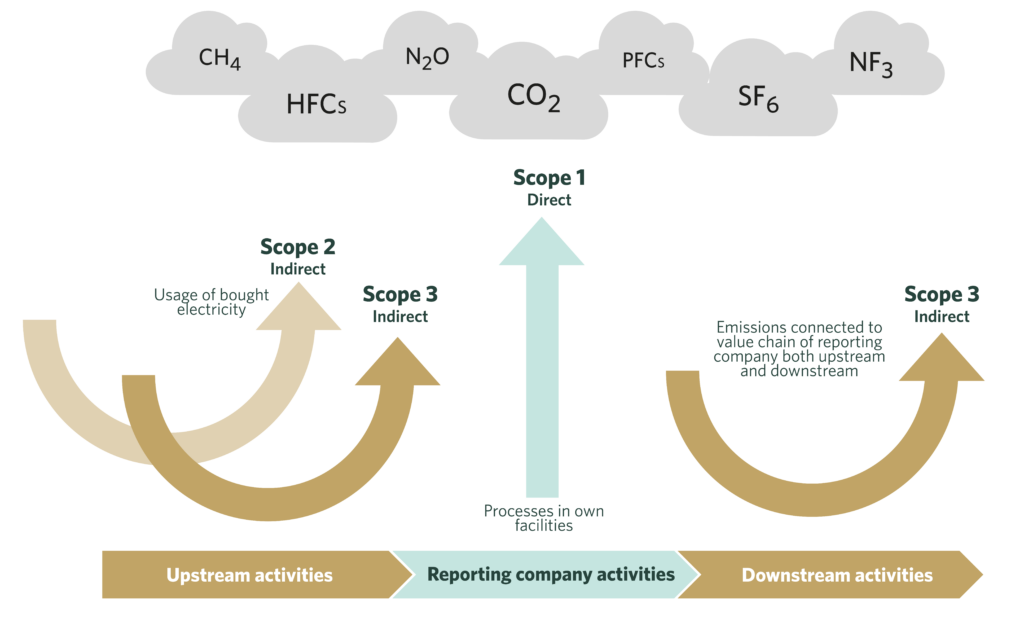
To create structure, the GHG Protocol divides emissions into three categories: Scope 1, Scope 2, and Scope 3.
Scope 1 – Direct Emissions
Scope 1 includes the direct greenhouse gas emissions that arise from sources owned or controlled by the organization.
Examples include the combustion of fuels in owned facilities, company-owned vehicles, or industrial process emissions.
Scope 2 – Purchased Energy
Scope 2 includes indirect emissions from purchased energy, such as electricity, district heating, or district cooling.
Scope 3 – Emissions in the Value Chain
Scope 3 includes the organization’s other indirect emissions and is, for many companies, the largest emissions category.
This includes, for example:
- purchased goods and services
- raw materials
- transport
- waste
- business travel
- capital goods
- use of sold products
For many organizations, Scope 3 accounts for more than 90 percent of the total climate impact.
Why Is Scope 3 Often the Biggest Challenge?
Scope 3 covers large parts of the value chain and is often based on information from many different actors. It is therefore common for calculations to be based on general emission factors or spend data.
This provides a good overview of climate impact and is often sufficient for reporting. But when companies want to understand which products, materials, or suppliers drive emissions, more detailed information is often required.
Data quality therefore becomes crucial to how useful the results are as a decision-making basis.

How Is Climate Impact Calculated?
A climate calculation is fundamentally based on two components: activity data and emission factors. Activity data describes what has actually happened in the organization, such as energy use, transport, material purchases, or fuel consumption.
Emission factors are then used to convert the activity into climate impact expressed in carbon dioxide equivalents, or CO₂e.
Activity data × emission factor = climate impact
Activity Data – Primary and/or Secondary
The GHG Protocol distinguishes between different types of data with varying levels of quality.
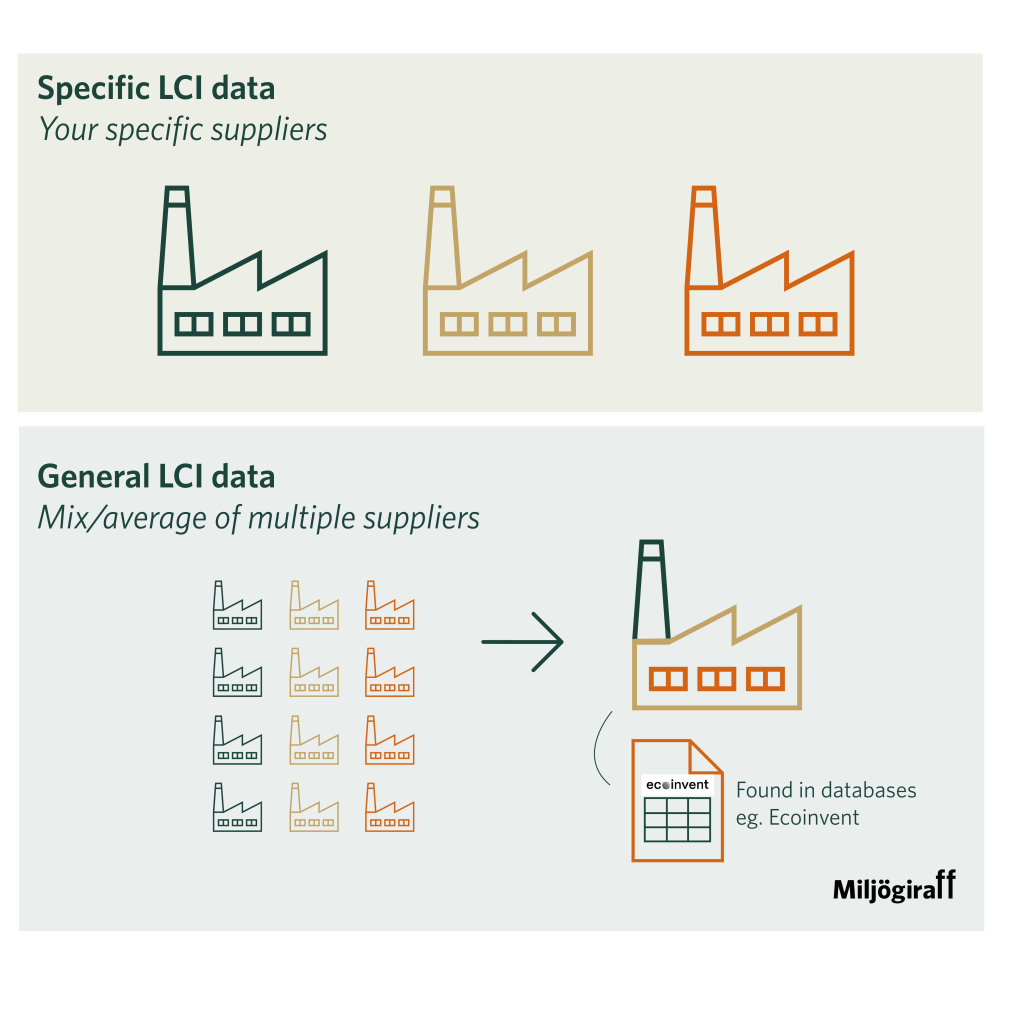
Primary data is organization- or supplier-specific information, such as energy measurements, supplier data, or product data.
Secondary data is based on general databases, standard values, or estimates.
Both types of data are used in climate calculations, but the more organization- and supplier-specific information that is used, the better the ability to follow up on results and make well-founded decisions.
What Are Emission Factors?

Emission factors are used to translate activities into climate impact.
They are often obtained from climate and LCA databases and describe how much climate impact a certain activity gives rise to.
The result is affected by, among other things:
- methodology
- geographical representativeness
- technical assumptions
- data quality
- time period
The choice of emission factor should therefore be transparent and adapted to the purpose of the calculation.
How Miljögiraff Helps
Miljögiraff helps companies create climate calculations and environmental data that are robust, transparent, and useful. With our expertise in life cycle assessment, climate calculations, and environmental data, we can go deeper than general standard assumptions and help you build a data foundation that works for both reporting and decision-making.
We help you structure operational data, choose relevant emission factors, improve data quality, and identify where more specific data is needed. This may mean moving from cost-based calculations to more precise calculations based on materials, product data, supplier information, EPDs, or LCA results.
In this way, the climate calculation becomes not just a report, but a practical tool for reducing climate impact and developing the business in the right direction.
Essem is structuring to achieve the goal of becoming climate neutral with the help of EPDs and GHG Scope 3 calculations